(Spring 2026)
Rob Roy Cedar Strip Canoe:
● Intro & Station Forms● Building the Strongback
● Cedar Strips
● Stripping the Hull
● Closing up the Hull
● Prepping for Fiberglass
● Fiberglassing the Outer Hull
Prepping for Fiberglass
It's now time to remove all the staples and screws, clean up the glue, fair and sand the hull and fill any cracks or holes.
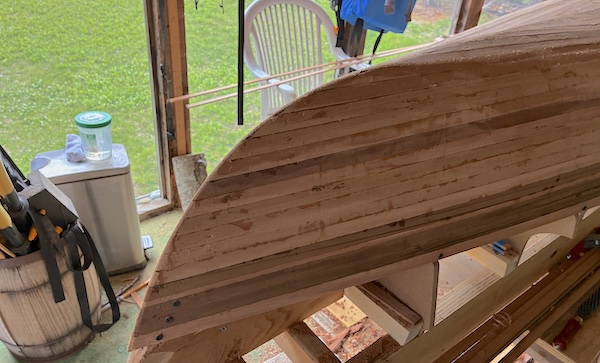
Regarding the excess glue, I've seen conflicting advice. Some recommend wiping the squeeze-out with a damp cloth as the strips are being installed and others advise leaving the drips, because when hardened, they are easier to remove than the wiped glue which gets pressed into the grain. I did a quick test early on and found the dried drips do pop off easily with a scraper so I left most of the drips.
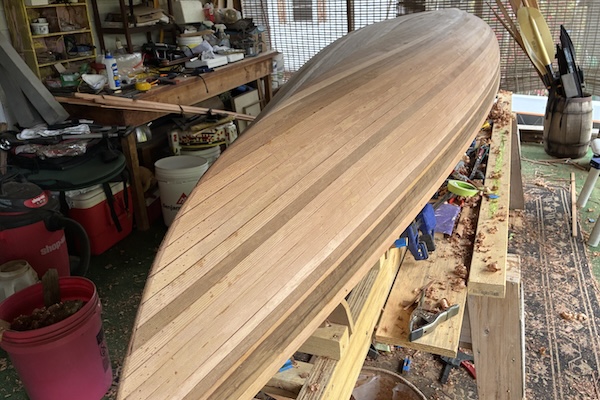
After scraping off the excess glue, I used a block plane to fair the hull by smoothing out rough spots and flattening and smoothing the peaks that occur where the strips meet.
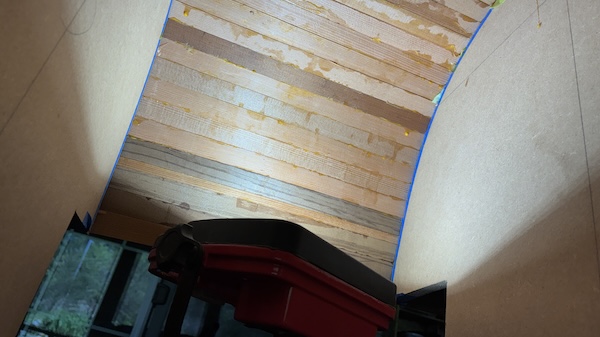
A shop light aimed upward from under the hull revealed occasional gaps between joints …
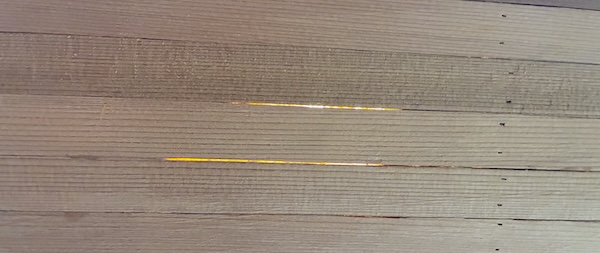
…when viewed from the outside.
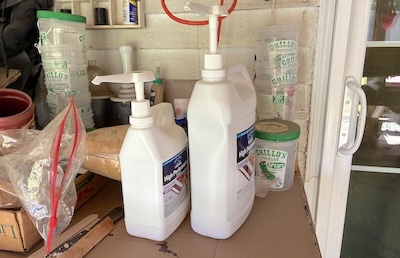
Any openings like these, along with the screw holes, were filled using epoxy (TotalBoat High Performance Epoxy with slow hardener) thickened with cedar dust.
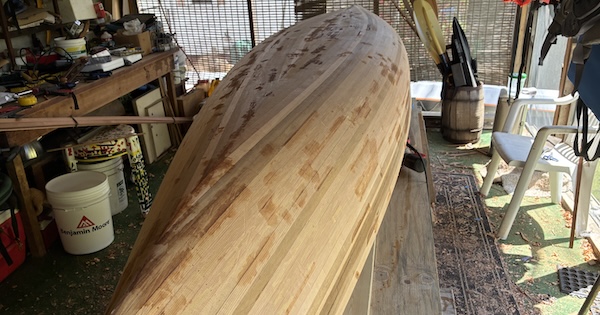
Maybe I got carried away but I tried to fill every gap, dent and rough spot…
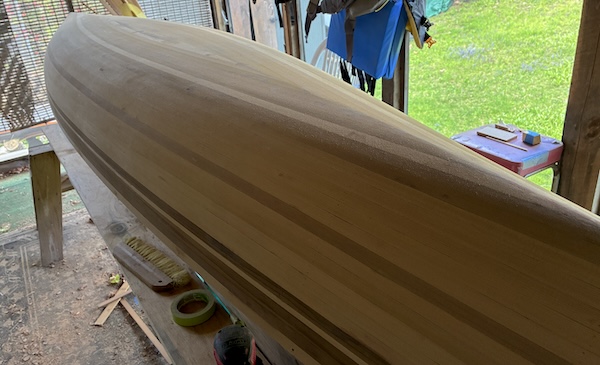
…then sanded the entire hull using a random orbital sander with 80-grit paper.
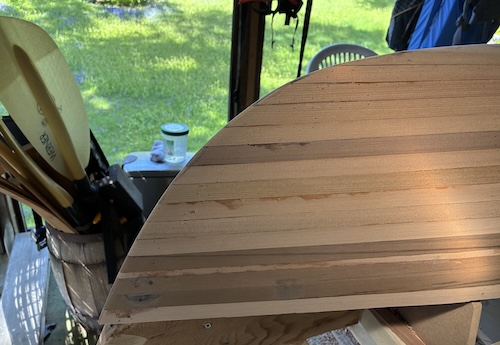
Here is the aft end – sanded and rounded off smoothly.
Everything seems to be going along so flawlessly… it almost feels like bad news is right around the corner.
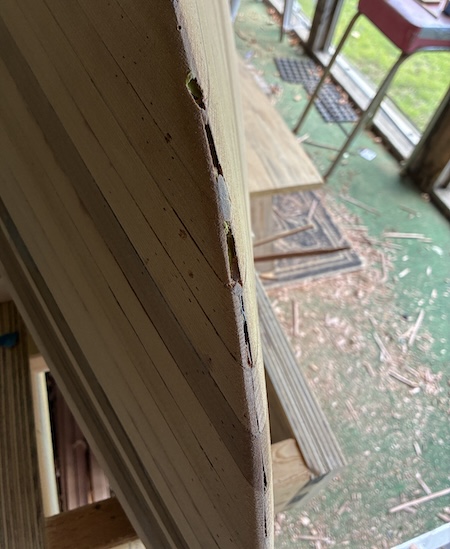
Well, here's the first surprise. I started rounding off the front with the orbital sander (as I had at the aft end) and very quickly these huge gaps appeared. Both ends of the canoe were handled the same so I'm not sure how or why this happened.
My first thought to fix the issue was to fill the gaps with thickened epoxy. Then I realized I was unsure how thick the rest of the bow was and worried that an epoxy patch would glue the canoe to the underlying stem form.
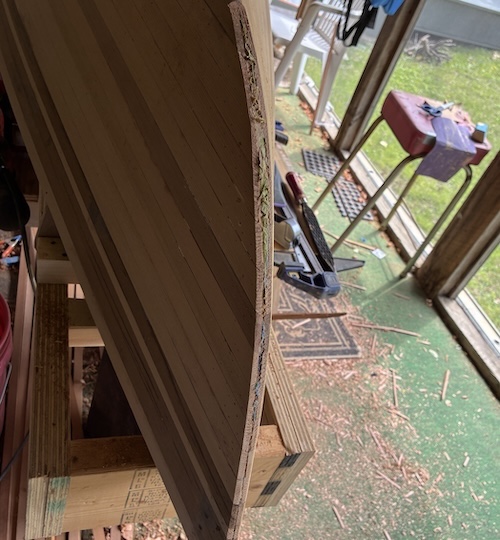
I eventually decided to sand the entire front edge down to a flat surface.
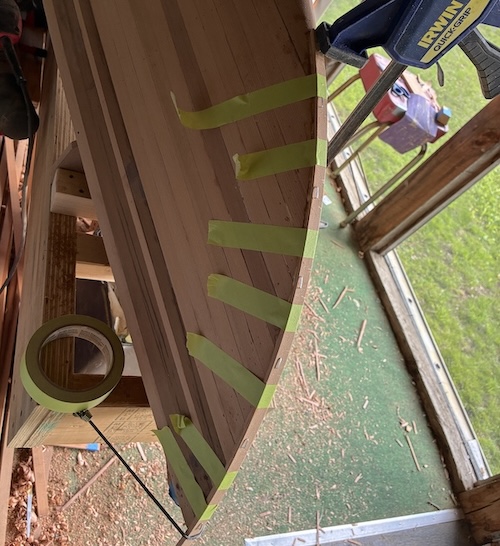
Then after smoothing the curve, glued a 3/8"-wide strip of cedar along the full length of the bow. I pre-bent the strip after soaking it in boiling water and let it dry before installing.
Then came unpleasant surprise number 2. A couple months ago I thought I had a bad cold or the flu. As the weeks went on, the symptoms ebbed and flowed but never went away. To make a long story short, I'm pretty sure I developed a serious allergic reaction to the Western red cedar – lungs, sinus, throat and skin. Looking back, it all started right after I began working with the cedar and I eventually realized that symptom severity correlated with work activity.
So I stopped all work and stayed away from the shop area for several weeks (hard to do) and sure enough, the symptoms mostly vanished. So, now what to do now?
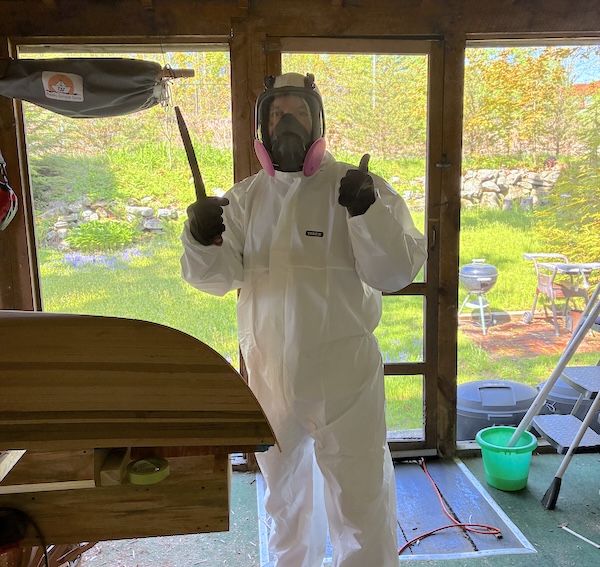
Short of giving up, the only solution seemed to be total hazmat mode! I purchased a full face mask, full body suit and gloves then…
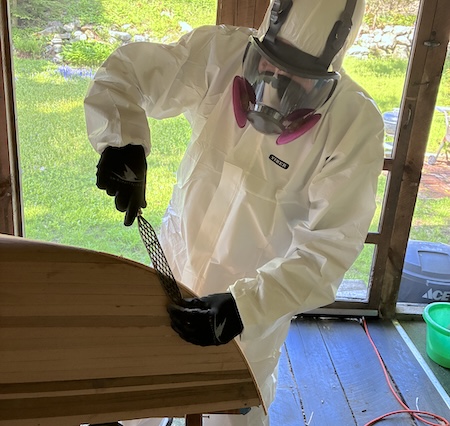
…picking up where I left off, went back to rounding off the bow. I guess this will be my work attire until the cedar is sealed in epoxy. (Then maybe I could start a Devo tribute band!)
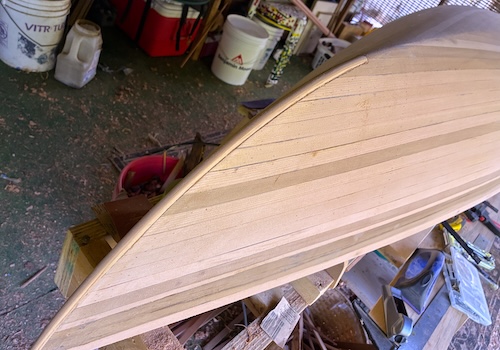
Even though I really like the look of a stemless bow, adding this vertical strip ended up working well and was probably the best solution. It will get cleaned up a little more with some filler then reinforced with an extra fiberglass strip and a fillet on the backside.
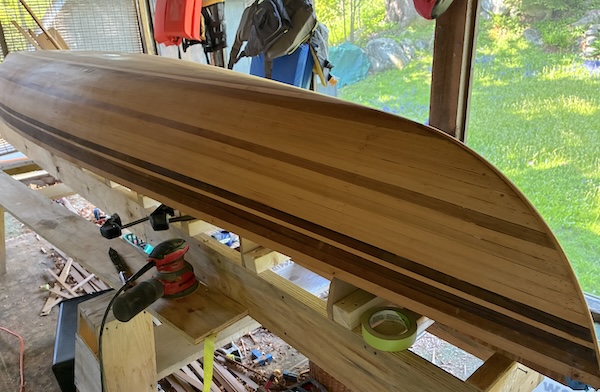
The rewarding step of wetting out the boat – a light coat of warm water over the hull – raises the grain in the cedar in prep for sanding and gives a preview of the final color.
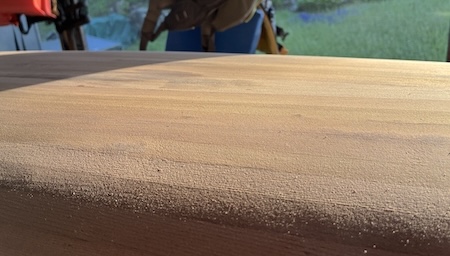
Here's a look at the raised grain after the hull has dried.
Just one more round of sanding to remove the raised grain and it will be time to begin fiberglassing.